What does the body carry as it traverses the ocean?
What currents has it witnessed?
What storms has it survived?
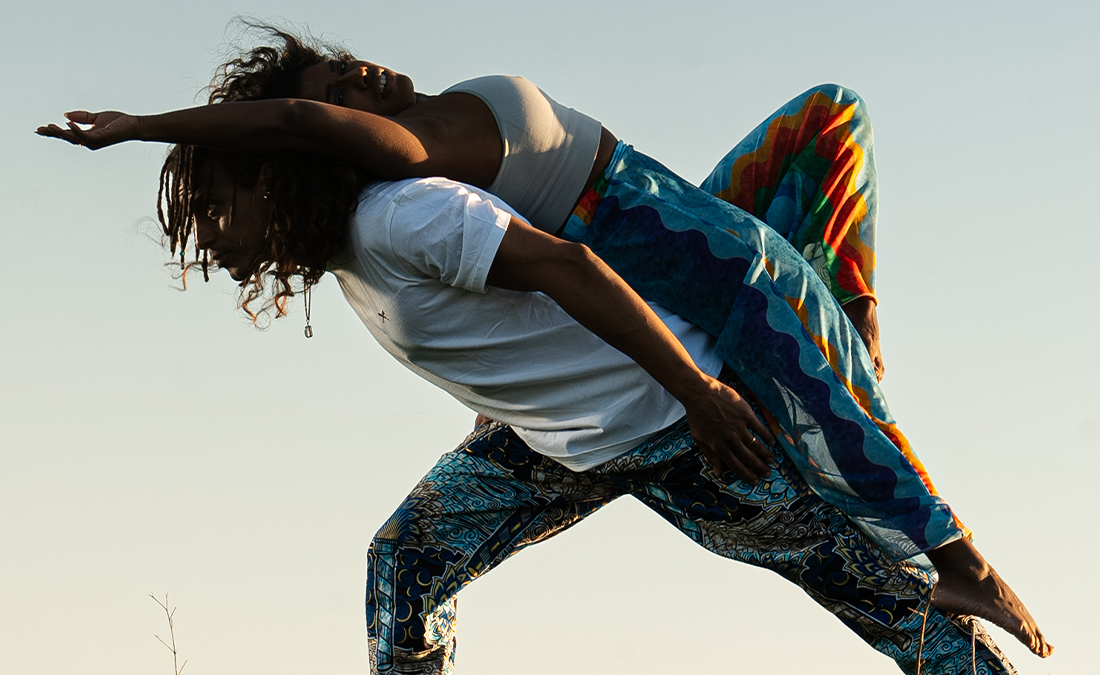
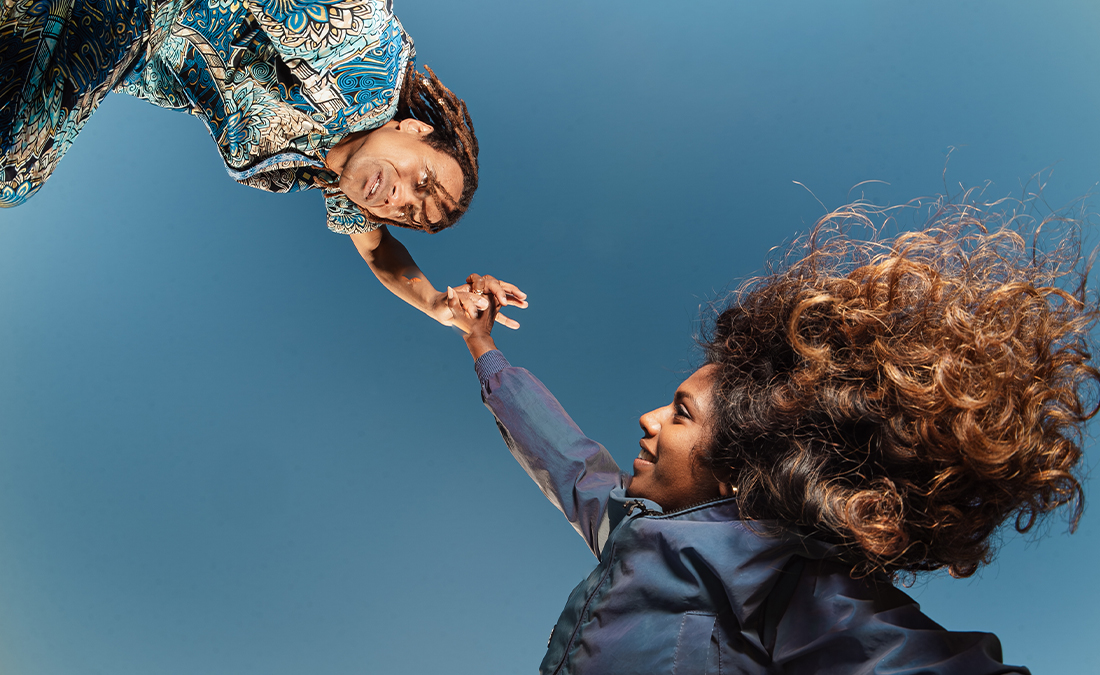
In Between the Oceans, Tiffani Achilleas and Raphael Moussa Hillebrand meet on terrain that is as deeply personal as it is political. Their steps carry the rhythms of Salvador da Bahia, the depths of Benin and Mali, and the resonances of Sri Lanka. What emerges is not merely a piece, but a danced dialogue—delving into solidarity, community, and the question of who stands up for whom when the tide rises.
The body does not forget. It is an archive of movement.
Tiffani Achilleas blends contemporary, urban, and traditional dance forms with questions of social justice. Raphael Moussa Hillebrand brings decades of work at the intersections of Hip-Hop, urban choreography, and decolonial thought. Together, they ask: How does memory become flesh? How does knowledge transform into bodily wisdom?
Here, theory becomes fluid. Decolonization, intersectionality, and Pan-Africanism leave the pages of textbooks behind. They transform into muscle tone, sweat, and sound. A radical standing up for one another—tangible in collective breath, untamable in movement.
Post-Show Artist Talk | Sun, 20 September 2026, 7:30 pm performance
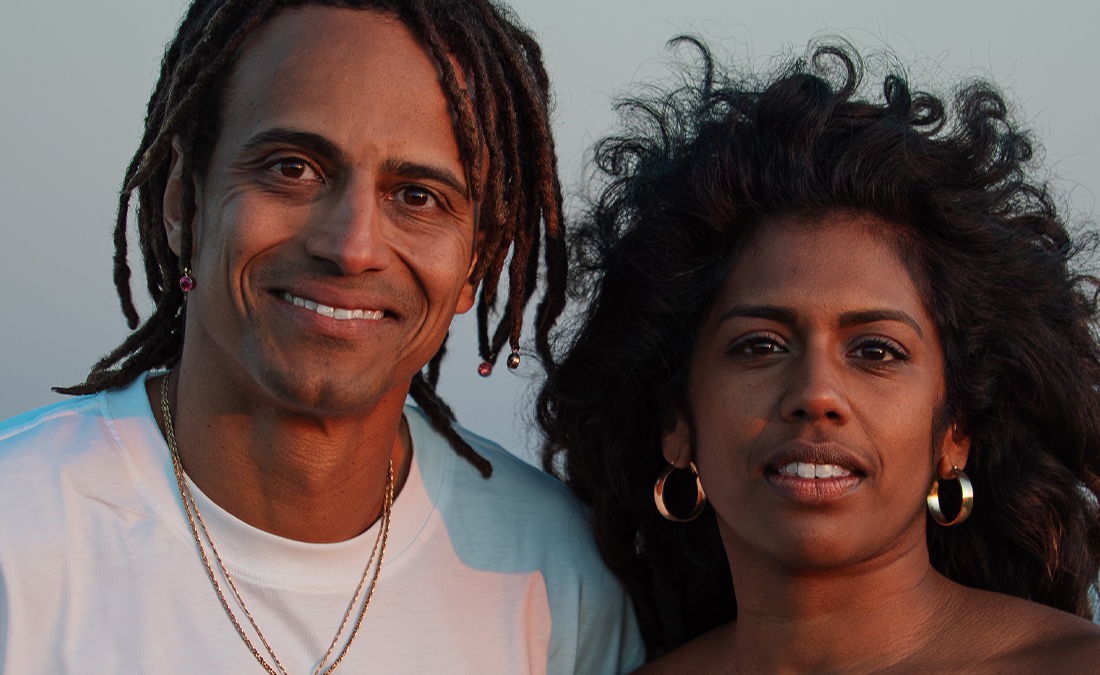
Join us for a post-show artist talk immediately following the performance on Sunday, 20 September 2026, at 7:30 pm. Meet Tiffani Achilleas and Raphael Moussa Hillebrand (Concept, Choreography & Performance) as well as Nora Amin (Dramaturgy) for a conversation about the artistic process behind the work, its themes, and the ideas that shaped its creation. The artists look forward to engaging in a dialogue with the audience.
Between the Oceans — Four Questions to Tiffani Achilleas & Raphael Moussa Hillebrand
KUYUM Tanzplattform: What was the starting point for Between the Oceans, and what brought you together to create this work?
Tiffani Achilleas & Raphael Moussa Hillebrand:
When we first met, we realised that our family ties and our work had taken us to Sri Lanka, Salvador da Bahia in Brazil, and Benin and Mali in West Africa. What are the odds! The experiences and connections we have made in those places have shaped who we are. Discovering more and more how intertwined our experiences are, we felt deeply connected and were longing to express how our bodies translate those experiences made between the oceans.
KT: You bring together different dance and cultural influences, including those from Salvador da Bahia, Benin, Mali and Sri Lanka. How do these different movement traditions meet and resonate within your bodies and in the work?
TA & RMH: There are many intersections between the dances from these places. Music and dance in Salvador are heavily influenced by West African traditional music and practices. Sri Lankan Tamil music has a strong percussion base as well, and due to different influences on traditions and practices over the centuries (e.g. by Portuguese colonisers), there are many resemblances to West African and Brazilian music and culture.
As we have spent time in these places individually, learning or practising their traditions and dances, our bodies naturally carry these influences as part of our movement patterns. For both of us, these places have woven a string of experiences that shape who we are and who we connect with. For example, with each other — that’s how the idea for Between the Oceans was born.
In our work, we let our bodies read through an archive of experiences and movements — movements that take us on a journey between the oceans.
KT: Solidarity and community are central themes in Between the Oceans. What do these ideas mean to you personally, and how do they become tangible through movement?
TA & RMH: To us, life without community doesn’t exist. It’s not necessarily the idea of community that is often referred to in a modern urban context, but rather the ancestral idea of a community — one that you don’t necessarily choose, but that exists because you share the same space and cultural practices.
Travelling between these places gave us a sense of what it is like to be perceived as part of the minority and as part of the majority. It taught us how to long for a place, but also how to belong to a place. These contradictions created the urge to expand our solidarity beyond peer groups. We don’t have to be from the same ocean or the same soil in order to feel connected and practise solidarity. We will stand together and take the waves as they come.
KT: What would you like the audience to take away from the performance – physically, emotionally or perhaps as a question that continues to resonate after the performance?
TA & RMH: We would like to take the audience on a journey through spaces and their connections, discovering the vast network that we, as humankind, have built if only we allow relationality to define who we are instead of sticking to roots and boxes that come along with them.
We want the audience to leave submerged in the idea that roots are not only the ones given to us by birth, but can also be the ones we grow by weaving connections throughout life.