
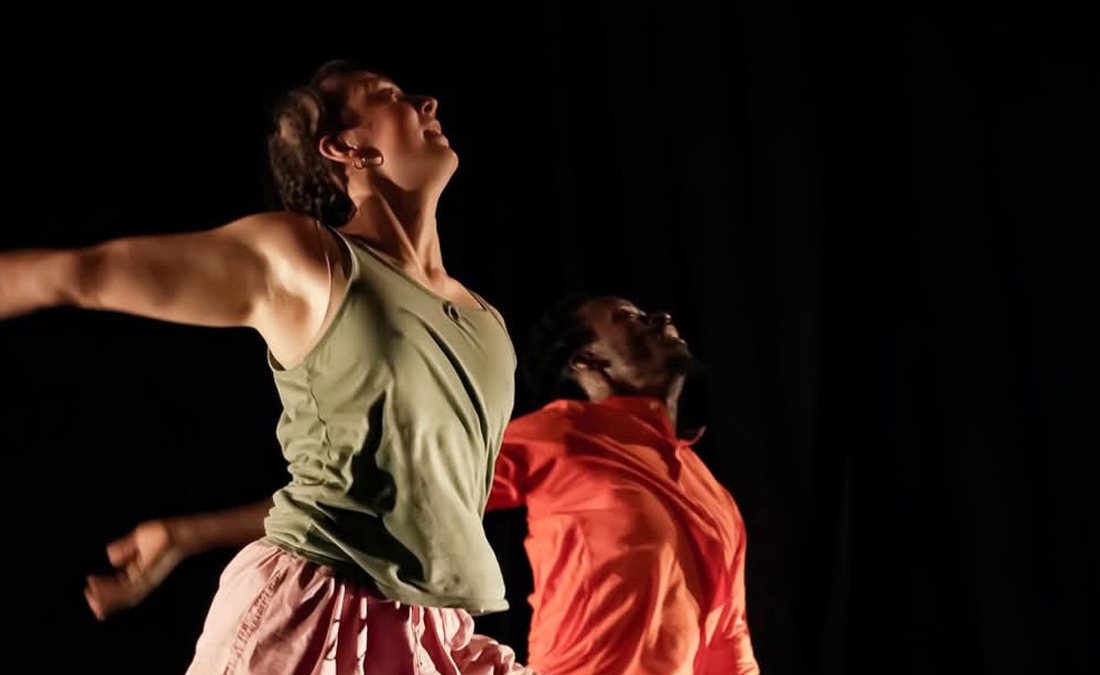
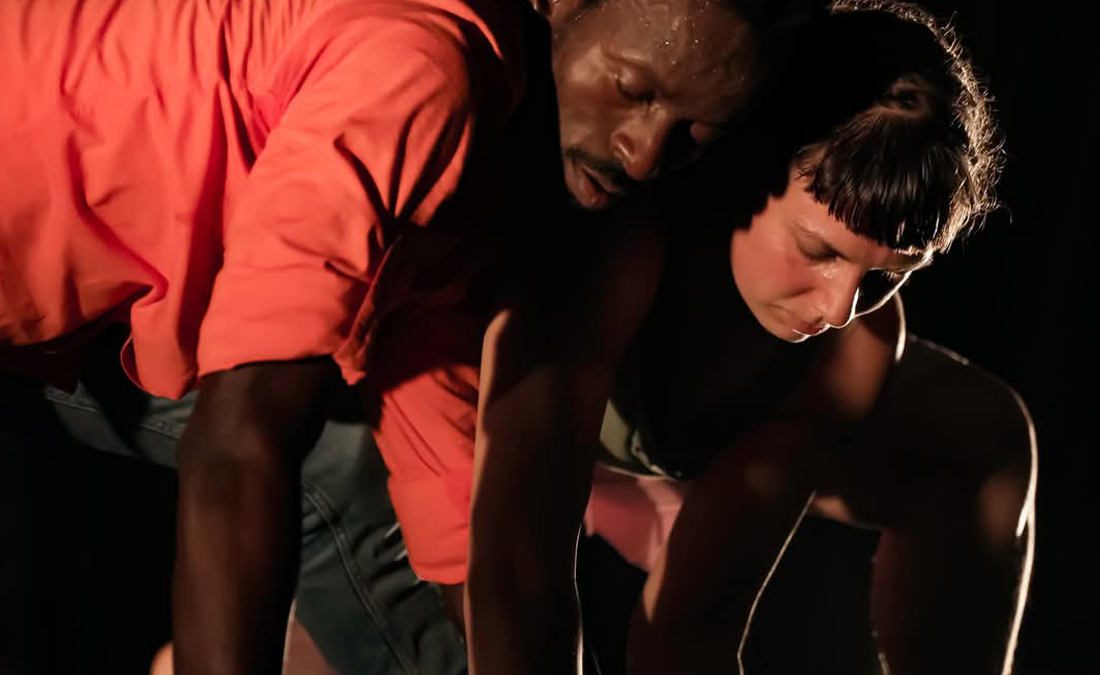

What happens when a body crosses a border?
In De Là à Là, two performers move in opposite directions: Martina Gunkel, a White artists from Germany, travels from Europe to Africa; Sanga Ouattara, a Black artists from Ivory Coast, travels from Africa to Europe. Their trajectories mirror one another—yet the conditions of migration they encounter are profoundly unequal.
They carry more than passports and personal belongings. Their bodies hold memory: traces of history, inherited rhythms, and lived experience. They are living archives—shaped by what precedes them and by the spaces they enter. Here, territory is not only geographical; it is inscribed in the body itself.
The performance exposes the asymmetry of mobility and migration. While movement from North to South is often framed as openness or expertise, the passage from South to North is frequently marked by restriction, suspicion, and systemic barriers—echoing long-standing colonial continuities.
Through choreography, presence, and confrontation, the artists explore how identity is shaped under these conditions. What is carried within us, and what is imposed from the outside? How does a place reshape a person?
De Là à Là does not resolve these tensions; instead, it holds them in shared presence. It asks how bodies positioned unequally within systems of migration can still meet on a human and sensory level—and what forms of relation may emerge across such divisions.