
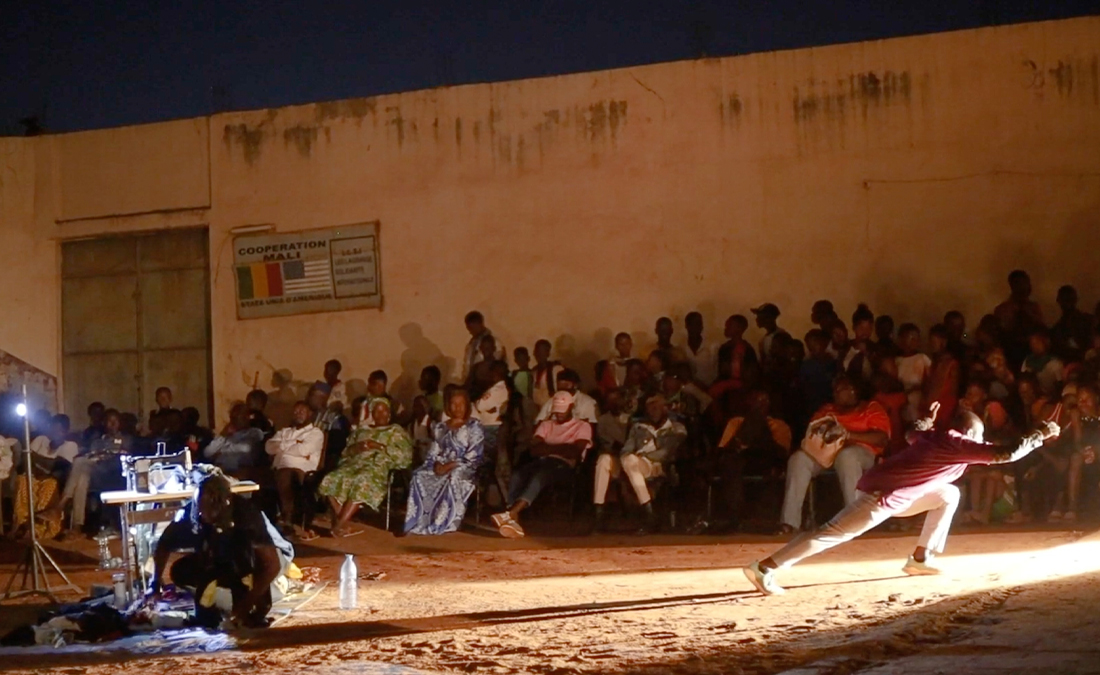
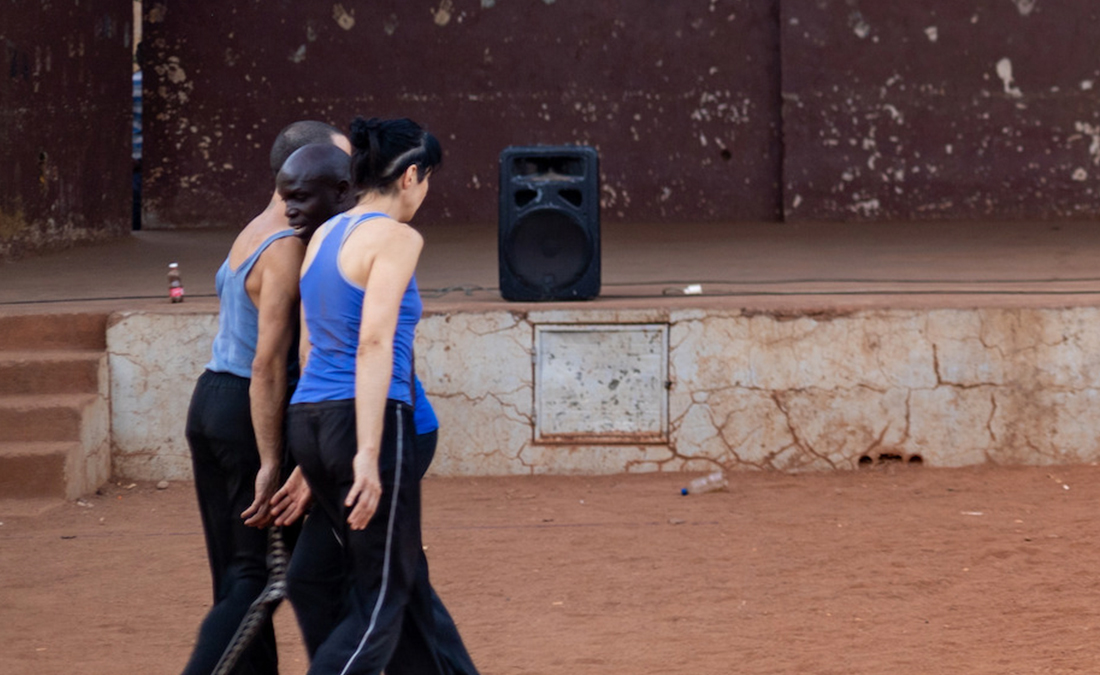
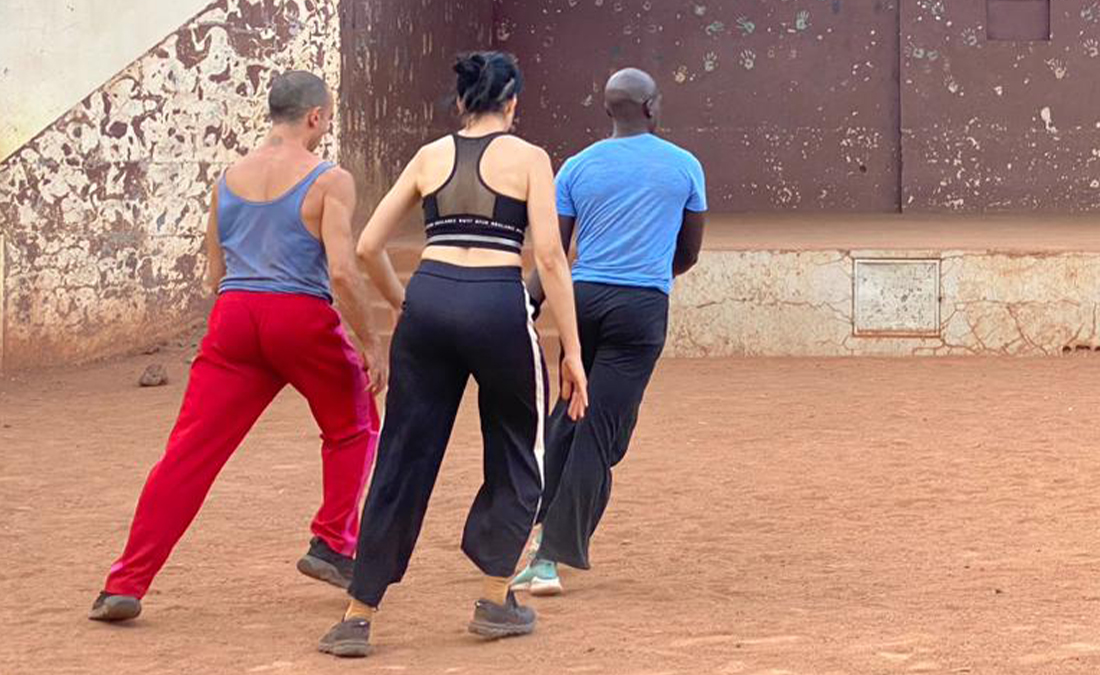
Every morning they walk to work. The walking itself is work. They all walk. Somewhere. In Nairobi to the Matatu (shared minibus), in Berlin to the underground station. The waves of people, the human queues, the masses that carve their way into the map of a city, day after day. Many try to avoid walking, inventing a job closer to home, recycling the work of others, breaking the cycle.
The Kenyan-German dance production JUA KALI by Jared Onyango and Lea Pischke examines the daily walk of citizens in Nairobi and Berlin. It inspects how the political conditions of a city can influence such a typically human activity.
In JUA KALI, bodily locomotion is taken up as a universal motif, as a paradox of both unity and solitude within the midst of a group.